What If the Real Antidepressant Is You?
The placebo effect is powerful—and why that truth matters more than you think.
Hosts:
Kevin Cornelius, LMFT
Dr. David Burns
What if one of the most widely accepted ideas in mental health isn’t true?
In this fascinating episode, Dr. David Burns and Kevin Cornelius discuss David’s recent Psychology Today article, “What If the Real Antidepressant Is You? The Placebo Effect Is Powerful—and Why That Truth Matters More Than You Think.” Together they explore decades of research on antidepressants, the surprising power of the placebo effect, and why giving yourself credit for your own recovery may be one of the most important—and hopeful—ideas in psychology.
Whether you’re taking antidepressants, considering them, or simply curious about the science of depression and recovery, this conversation will challenge assumptions, answer difficult questions with compassion, and leave you with a new perspective on where healing really comes from.
Episode Summary
Can a sugar pill relieve depression?
The answer, surprisingly, is yes.
But what if that isn’t the most interesting question?
In this thought-provoking episode, Dr. David Burns and Kevin Cornelius discuss David’s recent Psychology Today article, “What If the Real Antidepressant Is You? The Placebo Effect Is Powerful—and Why That Truth Matters More Than You Think.” Together they examine decades of research, clinical experience, and one of the biggest controversies in psychiatry: Do antidepressant medications work because of their chemistry—or because of the hope and expectation they inspire?
David explains why his own experience treating thousands of patients led him to question the effectiveness of antidepressant medications long before large-scale analyses reached similar conclusions. He shares the story of discovering research comparing antidepressants with placebos, and why those findings changed the way he thought about depression treatment forever.
The conversation then takes an unexpected turn as David tells a memorable story about a fictional “miracle drug” named Placebo. Through this thought experiment, he explains why the placebo effect is often misunderstood—and why recovering on a placebo doesn’t mean someone is “faking it.” Instead, David argues that people may be activating their own remarkable capacity for healing through hope, expectation, and changes in the way they think.
Kevin raises thoughtful questions that many listeners may be asking:
- If antidepressants aren’t doing the healing, why do so many people feel convinced they helped?
- Why do people become angry when the placebo effect is discussed?
- If the placebo effect is real, does that mean cognitive therapy is “just a placebo” too?
- How can we distinguish between hope, expectancy, and treatments that produce unique therapeutic benefits?
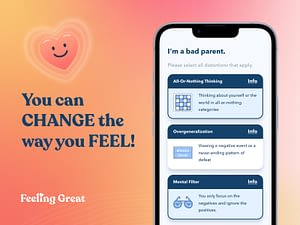
David also discusses new research from the Feeling Great app suggesting that while expectancy contributes to improvement, TEAM-CBT techniques appear to have measurable therapeutic effects above and beyond placebo alone.
The discussion also explores:
- Why David believes patients deserve the credit for their own recovery.
- How understanding how you recovered can help protect you from future episodes of depression.
- Common side effects and withdrawal symptoms associated with antidepressants.
- Why David encourages listeners never to stop psychiatric medication without working closely with their prescribing clinician.
- Drug-free approaches to depression, including TEAM-CBT, Feeling Good, Feeling Great, and the Feeling Great app.
Toward the end of the episode, Kevin asks David what gives him hope after more than five decades of clinical work. David shares exciting early findings from ongoing research on the Feeling Great app, reflects on the future of TEAM-CBT, and closes with an encouraging message for anyone who believes they’re hopeless: in his experience, hopelessness itself is almost always the illness speaking—not reality.
Whether you’re curious about antidepressants, fascinated by the placebo effect, or simply looking for hope in your own recovery, this episode will challenge assumptions and invite you to think differently about where healing really comes from.
Memorable Takeaways
- The placebo effect isn’t fake—it may be one of the most powerful healing forces we possess. Hope, expectation, and belief can produce genuine emotional and biological changes.
- You deserve the credit for your recovery. If you improve, understanding how you got better gives you the power to do it again when life knocks you down.
- Healing doesn’t have to come from a pill. According to David, lasting recovery comes from learning to change the thoughts and behaviors that keep depression alive.
- Question assumptions—even the popular ones. Science advances by following the evidence wherever it leads, even when the conclusions are uncomfortable or controversial.
- A treatment can create hope without being the source of healing. The conversation explores the important distinction between the benefits of expectancy and the unique effects of a treatment itself.
- Never stop psychiatric medication on your own. If you’re considering changing or discontinuing medication, work closely with your prescribing clinician to do so safely.
- Hopelessness is a feeling—not a fact. David argues that hopelessness is one of depression’s greatest illusions, and that recovery is often possible even when it seems unimaginable.
- The most important question isn’t “What cured me?” but “What did I do that helped me recover?” Your answer may become your roadmap for staying well in the future.
Listener Survey
We’d love to hear from you!
Your feedback helps shape future episodes and allows us to create content that is as helpful and meaningful as possible. Please use this link to take the feedback survey and share your thoughts with us about this episode.
Your voice matters—and as David points out in this episode, sometimes the most important conversations begin when we’re willing to express what we’re really thinking and feeling.
Thank you for listening to The Feeling Good Podcast!
Contact Information
Kevin Cornelius, LMFT is a Level 5 Certified Master TEAM-CBT Therapist and Trainer and the Clinical Director of Feeling Good Institute–Silicon Valley. He specializes in the treatment of trauma, anxiety, depression, relationship problems and insomnia. You can reach Kevin at kevin@feelinggoodinstitute.com and visit his website at www.tools4change.me.
You can reach Dr. Burns at david@feelinggood.com.
Feeling down in these turbulent times? Take a ride on our Feeling Great app.
Feeling Great feels wonderful!
You owe it to yourself to feel GREAT!
Give the Greatest Gifts of ALL–Love and Happiness!