When Trauma Still Hurts: Memory Rescripting
Hosts:
Kevin Cornelius, LMFT
Dr. David Burns
Content Note
This episode includes discussion of trauma, including sexual abuse and violence, which may be distressing for some listeners.
What Is Memory Rescripting?
Memory rescripting is a therapeutic technique that helps people transform how they experience painful memories.
- Instead of simply revisiting trauma, clients:
- Re-enter the memory vividly (often with eyes closed)
- Experience the emotions fully
- Then actively change the outcome of the scene
- The key idea:
Many trauma victims, see themselves, still, as the helpless little child, the victim, and every time they re-experience the trauma, they re-enforced those brain circuits. Memory Rescripting allows patients to establish new brain circuits and new ways of seeing themselves.
- Clients often:
- Step into the scene as a powerful adult self
- Protect their younger self
- Confront or stop the perpetrator
- Create a new, empowering ending
A Powerful Case Example
David shares a striking case of a young woman struggling with:
- Severe anxiety
- Agoraphobia (fear of leaving home, especially public transportation)
What wasn’t working:
- Cognitive therapy helped overall mood
- But she refused exposure to public transportation
Breakthrough moment:
She revealed a childhood trauma:
- A babysitter repeatedly sexually abused her
The Memory Rescripting Process
During a guided session:
- She vividly re-experienced the traumatic memory
- At peak emotional intensity, she:
- Entered the scene as a strong adult
- Physically stopped the perpetrator (in imagination)
- Enacted intense revenge fantasies
- She continued reshaping the scene until:
- She felt relief and empowerment
Surprising Outcome
After the session:
- She voluntarily booked a solo international flight
- Completed 21 hours of travel alone
- Reported:
- Zero anxiety
- Ability to neutralize fear using spontaneous rescripting
- She ended therapy shortly after—fully recovered from her presenting issue
Key Insight
Memory rescripting may work by:
- Shifting identity:
- From helpless victim → powerful protector
- Allowing expression of:
- Suppressed anger
- Emotional truth
- Rewriting emotional memory—not just recalling it
Important Caveat
- This technique is not for everyone
- David notes:
- He has used it rarely in decades of practice
- Most patients improve with standard cognitive and exposure methods
Relapse Prevention for Anxiety
A crucial takeaway:
Recovery is maintained through continued exposure—not avoidance.
Key principles:
- Face your fears regularly
- Don’t become complacent
- If fear returns:
- It does not mean failure
- It means it’s time to re-engage the tools
Normalizing Setbacks
- Negative thoughts and feelings will return at times
- This is part of being human—not a sign something is wrong
- You can reuse the same tools that worked before
Core Takeaways
1. Thoughts create feelings
Changing distorted thoughts can eliminate emotional suffering.
2. There is no one-size-fits-all method
Different techniques work for different people.
3. Don’t give in to hopelessness
Even long-standing anxiety can be overcome.
4. Avoid rigid “schools” of therapy
Flexibility and multiple tools are key.
5. Memory Rescripting is one powerful method that could help
When the patient rewrites the script on a traumatic memory, new brain circuits are created and the patient is freed from the pain of the traumatic event.
“100% vs 200% Cure”
- 100% Cure: Fear disappears completely
- 200% Cure: You come to enjoy what you once feared
Resources Mentioned
- When Panic Attacks by Dr. David Burns
- Feeling Good by Dr. David Burns
- Feeling Great by Dr. David Burns
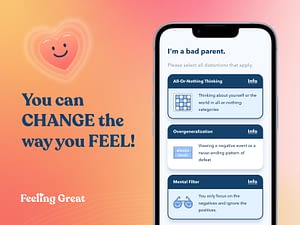
- Feeling Great App (free at www.feelinggreat.com)
- Free anxiety resources and classes available at www.feelinggood.com
Let Us Know What You Think of This Episode
Please use this link to take a very brief survey and share your opinion with us about this episode
Contact Information
Kevin Cornelius, LMFT is a Level 5 Certified Master TEAM-CBT Therapist and Trainer and the Clinical Director of Feeling Good Institute–Silicon Valley. He specializes in the treatment of trauma, anxiety, depression, relationship problems and insomnia. You can reach Kevin at kevin@feelinggoodinstitute.com and visit his website at www.tools4change.me.
You can reach Dr. Burns at david@feelinggood.com.
Feeling down in these turbulent times? Take a ride on our Feeling Great app.
Feeling Great feels wonderful!
You owe it to yourself to feel GREAT!
Give the Greatest Gifts of ALL–Love and Happiness!