Episode 515: Ask David
Parenting Meltdowns, Real-Time TEAM-CBT, and When Negative Thoughts Won’t Stop
What do you do when your child has a public meltdown—and you feel your own frustration rising just as quickly?
And what if your mind feels so overwhelmed with anxious or depressive thoughts that completing a Daily Mood Log seems impossible?
In this Ask David episode, Dr. David Burns is joined by host Kevin Cornelius, LMFT, and Psychiatrist/TEAM-CBT therapist Dr. Matt May to answer two thoughtful listener questions that many parents and therapy enthusiasts will recognize. Together, they demonstrate TEAM-CBT techniques live, showing not only what to do, but how to think differently in the moment.
Along the way, they explore why changing your relationship with your own thoughts is often more important than trying to control other people’s behavior.
In This Episode
Question 1: How Do I Use TEAM-CBT in Real Time When My Child Has a Meltdown?
A listener describes taking his two young sons to the driving range when one child suddenly wants to leave while the other wants to stay. As frustration mounts, so do the automatic thoughts:
- “He’s being a brat.”
- “He’s too immature for this.”
- “He’s ungrateful and whines all the time.”
Although the listener can challenge these thoughts later using a Daily Mood Log, he wonders:
How can I use TEAM-CBT in the middle of an emotionally charged parenting moment?
David, Kevin, and Matt explore this question through several live demonstrations.
Topics Include:
- Why self-compassion comes before effective parenting
- The danger of “should” statements directed at yourself
- How beating yourself up actually makes it harder to respond compassionately
- Why practice outside emotional moments prepares you for success inside emotional moments
- Accepting your own imperfections as a parent
Matt demonstrates how to respond to his own inner critic using Externalization of Voices, replacing self-criticism with realistic self-acceptance instead of perfectionism.
Challenging “Shoulds” About Other People
The conversation then shifts to another common trap: Trying to make other people different than they are.
Together they examine several automatic thoughts parents commonly experience:
- “He’s being a brat.”
- “He’s too immature.”
- “He’s ungrateful.”
David helps Matt and Kevin identify the cognitive distortions hiding inside these thoughts, including:
- Labeling
- Hidden should statements
- Unrealistic expectations
- Blaming
Rather than arguing intellectually, they demonstrate TEAM-CBT methods such as:
- Acceptance Paradox
- Self-Defense
- Counterattack
- Externalization of Voices
The discussion highlights an important insight:
Much of our emotional suffering comes not from other people’s behavior—but from insisting they should be different than they are.
Kevin shares a personal story about using the Feeling Great app’s Paradoxical Magnification exercise to dissolve his own “should” statements about parenting through humor and acceptance.
Question 2: What If My Mind Never Stops Producing Negative Thoughts?
The second listener has struggled with depression and anxiety since adolescence.
Although he believes in TEAM-CBT, he finds the Daily Mood Log overwhelming because his mind produces what feels like hundreds of negative thoughts every minute.
His questions include:
- How long should I spend on a Daily Mood Log?
- Do I need to answer every negative thought?
- Why can’t I create positive thoughts that actually feel believable?
David’s Advice
Dr. Burns explains that:
- 10–20 minutes of Daily Mood Log work is usually enough.
- You do not need to answer every negative thought.
- Most automatic thoughts are simply variations of a handful of core beliefs.
- Consistent practice matters much more than perfection.
Using his own recovery after recent surgery as an example, David reminds listeners that small, steady efforts often produce remarkable long-term change.
Helpful TEAM-CBT Strategies Discussed
Kevin describes how simply sitting down with the Daily Mood Log often quiets his racing mind and helps him focus on what truly matters.
David recommends another powerful exercise:
Negative Practice
Instead of fighting racing thoughts:
- Schedule a few minutes.
- Record every negative thought without challenging them.
- Then listen back to the recording.
Many people discover that simply hearing their thoughts aloud changes their relationship to them.
Matt also emphasizes several uncovering techniques that help identify the deeper beliefs generating so many automatic thoughts, including:
- The What-If Technique
- Individual Downward Arrow
- Cost-Benefit Analysis
- Positive Reframing
Rather than trying to “think positively,” TEAM-CBT first helps eliminate the hidden resistance that makes positive thoughts difficult to believe.
A Quick Speed Round
Near the end of the episode, David introduces a new experiment:
Rapid-fire Ask David answers.
In just thirty seconds, he explains one of the central concepts from Feeling Great:
The Four Deaths of the Self
- The death of the Special Self (depression)
- The death of the Fearful Self (anxiety)
- The death of the Angry, Blaming Self (relationship conflict)
- The death of the Entitled Pleasure-Seeking Self (habits and addictions)
David explains that each “death” ultimately reveals something surprising:
There was never anything essential to lose—only freedom to gain.
Listener Feedback
The team asks for your input:
Would you rather hear:
- Longer, in-depth discussions of just a few questions?
- Faster “speed round” answers covering many listener questions?
Let them know through this week’s listener survey.
Resources Mentioned
- Feeling Great by Dr. David Burns
- The Feeling Great App
- Episode 507: Mastering the Daily Mood Log: Small Details, Life-Changing Results
- Daily Mood Log
Memorable Takeaways
- Self-compassion is often the first step toward becoming the parent you want to be.
- Your emotional suffering usually comes from your thoughts—not from other people’s behavior.
- You don’t need to defeat every negative thought to feel dramatically better.
- Practice emotional skills when you’re calm so they’re available when emotions run high.
- Small, consistent Daily Mood Log work can create profound change over time.
As always, thank you for listening to the Feeling Good Podcast. If you enjoyed this episode, please subscribe, leave a review, and send us your questions—you just might hear them discussed on a future Ask David episode.
Contact Information
You can reach Matt May, MD @ https://www.matthewmaymd.com
Kevin Cornelius, LMFT is a Level 5 Certified Master TEAM-CBT Therapist and Trainer and the Clinical Director of Feeling Good Institute–Silicon Valley. He specializes in the treatment of trauma, anxiety, depression, relationship problems and insomnia. You can reach Kevin at kevin@feelinggoodinstitute.com and visit his website at www.tools4change.me.
You can reach Dr. Burns at david@feelinggood.com.
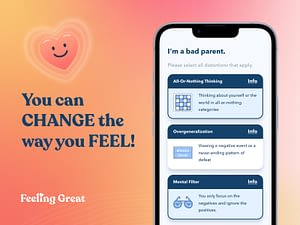
Feeling down in these turbulent times? Take a ride on our Feeling Great app.
Feeling Great feels wonderful!
You owe it to yourself to feel GREAT!
Give the Greatest Gifts of ALL–Love and Happiness!