Ask David: Is High Speed Change a Quick Fix?
Trauma, Anxiety, and What Really Works
Hosts:
Kevin Cornelius, LMFT
Dr. David Burns
Guest: Dr. Rhonda Barovsky
Episode Summary
In this powerful Ask David episode, Dr. David Burns, Kevin Cornelius, and Dr. Rhonda Barovsky tackle two deeply important listener questions:
- Is rapid emotional recovery just a “quick fix,” especially for people with severe trauma?
- How can someone manage intense anxiety and “what if” thoughts in the moment—when they keep coming back?
Through vivid clinical stories, real examples from the Feeling Great app, and live demonstrations of TEAM-CBT techniques, the panel explores why working in the present moment can lead to profound and lasting emotional change—even for people with severe trauma histories.
Question 1: Is Fast Change Just a “Quick Fix”?
Dr. Burns responds to a question inspired by the story of Elise, a Holocaust survivor who recovered from severe depression after challenging a single, devastating belief:
“I’ve never accomplished anything meaningful in my life.”
When that belief was overturned, Elise’s depression disappeared—immediately.
Listeners often wonder:
- Was something deeper left unresolved?
- Doesn’t trauma require long-term exploration of the past?
Dr. Burns shares:
- 50 years of clinical experience producing rapid, measurable symptom elimination
- Research from the Feeling Great app showing that current thoughts—not past suffering—predict change
- Why working in the present moment automatically transforms the past
- Why many therapy schools rely on belief systems rather than data
He also discusses new findings (recently published in Psychology Today) showing that prior depression over the last two years adds zero predictive value once current mood and thoughts are addressed. “The moment you’re in is vastly more important than the one you remember.”
Question 2: What If My Anxious Thoughts Keep Coming Back?
The second question comes from Dina, a college student overwhelmed by social anxiety and catastrophic “what if” thoughts about meeting with her professor.
Despite successfully completing a Daily Mood Log and reducing her anxiety to near zero, Dina finds that the thoughts keep returning in real-life situations.
The team explains why this happens—and what to do next.
Key strategies discussed:
- Why cognitive work alone isn’t enough for anxiety
- The importance of exposure and testing fears in real situations
- Using self-disclosure to dissolve shame
- Turning anxiety into connection rather than avoidance
- Role-playing feared scenarios (“Professor from Hell”)
- Externalization of voices
- Feared fantasy and “what-if” techniques
- Shame-attacking exercises
- Asking for real feedback instead of guessing what others think
- Identifying hidden emotions (such as unexpressed anger)
- Understanding interpersonal roles and rules that fuel anxiety
Multiple techniques are demonstrated live, showing how anxiety collapses when fears are brought into the open with warmth, humor, and honesty.
Key Takeaways
- Rapid emotional change is not a gimmick—it can be measured, replicated, and sustained
- Trauma is embedded in the present moment, not trapped in the past
- Anxiety persists when we hide, not when we feel
- Exposure + self-disclosure = freedom
- You don’t need to eliminate negative thoughts—just stop believing them
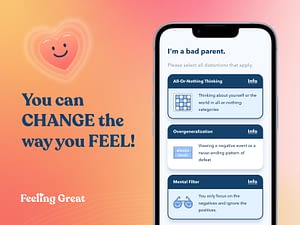
- The Feeling Great app offers free, evidence-based tools anyone can use
Tools & Resources Mentioned
- Feeling Great App (free): https://feelinggreat.com
- Daily Mood Log
- TEAM-CBT tools:
- Motivational Methods
- Cognitive Techniques
- Exposure
- Hidden Emotion Work
- Five Secrets of Effective Communication
- Psychology Today article: “The Moment You’re In Is Vastly More Important Than the One You Remember”
Memorable Quotes
- “When we change the present, we change the past.” — Dr. David Burns
- “Shame is like a vampire—it can’t survive the light of day.”
- “Stop doing one thing and expecting it to work for everyone.”
- “You don’t need to be perfect to feel better.”
Listener Invitation
Have a question you’d like Dr. Burns to answer on a future episode?
Submit it through the Feeling Great app or the Feeling Good Podcast website.
Kevin, Rhonda, and I thank you for listening today!
Let Us Know What You Think of This Episode
Please use this link to take a very brief survey and share your opinion with us about this episode
Contact Information
Kevin Cornelius, LMFT is a Level 5 Certified Master TEAM-CBT Therapist and Trainer and the Clinical Director of Feeling Good Institute–Silicon Valley. He specializes in the treatment of trauma, anxiety, depression, relationship problems and insomnia. You can reach Kevin at kevin@feelinggoodinstitute.com and visit his website at www.tools4change.me.
Dr. Rhonda Barovsky is a Level 5 Certified TEAM-CBT Master Therapist and Trainer and specializes in the treatment of trauma, anxiety, depression, and relationship problems. Check out her website: www.feelinggreattherapycenter.com.
You can reach Dr. Burns at david@feelinggood.com.
Feeling down in these turbulent times? Take a ride on our Feeling Great app.
Feeling Great feels wonderful!
You owe it to yourself to feel GREAT!
Give the Greatest Gifts of ALL–Love and Happiness!