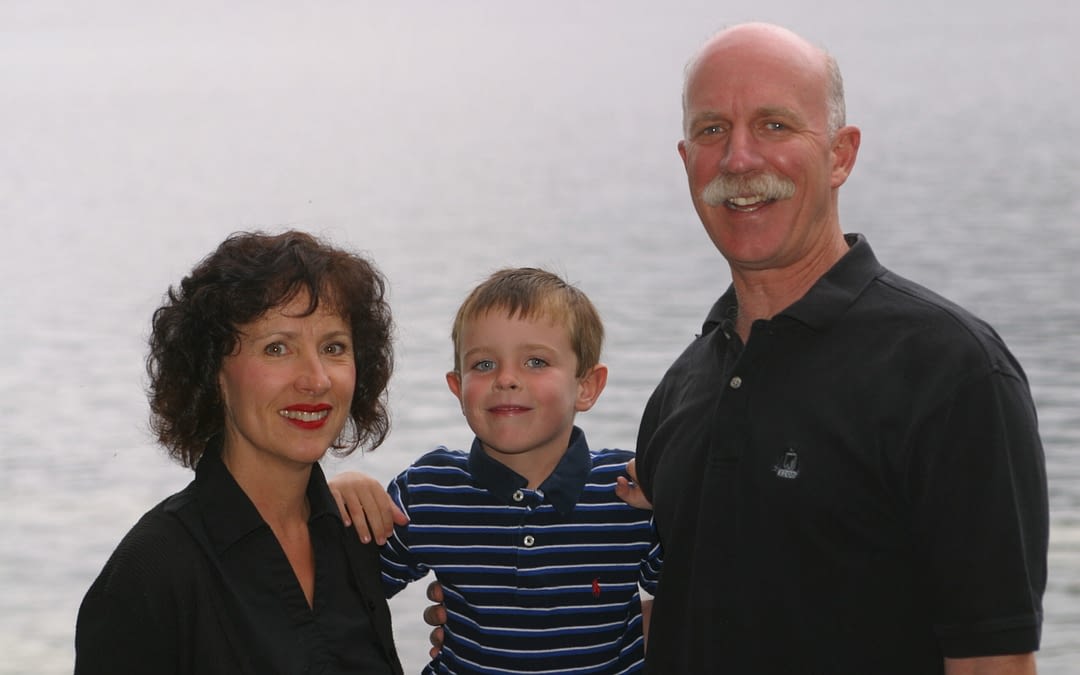
(featured photo shows David, his wife Yvonne, and son, Joey, when young)
Meet the Incredible Dr. David Antonuccio, Part 2 of 2
Shrink, Songwriter, and Hero
Today we continue our conversation with my dear friend and esteemed colleague, Dr. David Antonuccio, a true scholar, clinician, researcher, musician, and champion of scientific transparency.
The Nicotine Patch Study
David revisited his landmark research on the nicotine patch, a costly trial involving roughly 600 participants who were randomly assigned to receive either a real nicotine patch or a sham patch. The goals were to assess safety and efficacy.
The safety data looked reassuring. However, the efficacy findings were unexpected: the placebo patch worked just as well as the active nicotine patch in reducing smoking. The sponsoring company published the safety data but refused to publish—and refused David access to—the efficacy findings, which showed no advantage for the nicotine patch. You can check the link to the NEJM article here.
David writes: “Notice the 48 week follow-up data were excluded in this paper despite the fact that they were available. That really annoyed me. I also now believe that the original version of the paper was ghostwritten and ghost analyzed by the industry folks.in other words. I’m not sure that the authors ever had access to the “raw” data before they were analyzed.”
This was important because there was a decrease in smoking DURING the study among those wearing the patch, and getting their “fix” of nicotine that way. . . but what happened AFTER the study?
David writes: “Here is the link to the follow up paper that emphasized efficacy and included the 48 week follow-up data.”
Notice that this paper was not published until three years later, when the Nicotine Patch had already been heavily advertised and sold on the market. This early experience in his career revealed the tension between marketing interests which focus on sales, and scientific interests which focus on truth and transparency—a daunting and frustrating pattern that would emerge again and again in his career.
Expert Testimony in a Tragic Criminal Case
David then described expert testimony he provided in a deeply troubling legal case. A 72-year-old woman, happily married for 50 years and a respected kindergarten teacher, had recently been prescribed Paxil, along with Ambien and Ativan.
She abruptly, and without memory, woke up in the middle of the night and stabbed her husband 200 times and was subsequently arrested for homicide.
There was no jury trial; instead, a plea bargain was used to determine sentencing. Dr. David Antonuccio was called as an expert witness in her defense. He described Dr. David Healy’s research documenting a significant increase in both suicidal and violent urges among some patients taking SSRIs, especially Paxil. He argued that this woman’s bizarre behavior was consistent with a drug-induced dissociative or fugue state.
Based in part on David’s testimony, the charge was reduced to manslaughter, and the judge sentenced her to time served, allowing her to return home to her children.
For more on this topic:
Black Box Warnings and Patient Rights
David also emphasized the urgent need to revise Black Box warnings to reflect the full range of possible toxic or dissociative effects of psychiatric medications—not just suicidality. He has long advocated for a Patient Bill of Rights to ensure scientific transparency and informed consent.
A Surprising Conversation with Dr. John Nash
David shared a fascinating personal story about calling Dr. John Nash, whose life inspired the award-winning film A Beautiful Mind. In the movie, Nash’s recovery from schizophrenia is portrayed as medication-dependent. However, Nash told David directly that this was not true—the medication narrative was added to the script, possibly out of concern that portraying his recovery without meds might discourage viewers from taking prescribed medications.
Nash said: “What saved me was the support of family and friends.”
Music, Truth, and “Buzz”
David is also a talented songwriter. One of his songs, “Buzz,” addresses the emotional and ethical issues surrounding electroconvulsive therapy (ECT). The inspiration came from a man in the Midwest who was legally ordered to undergo ECT against his will. A widespread public outcry ultimately convinced the judge to rescind the order.
Forgiveness and “In the Air Tonight”
One of David’s favorite songs is Phil Collins’ “In the Air Tonight,” which he sees as a deeply spiritual musical meditation on forgiveness—a theme David considers one of the most powerful psychological forces we possess. David explains that the Phil Collin’s song is about forgiveness, but more indirectly and specifically about the songwriter’s inability to forgive.
And yes—David sang it live for us on the podcast!
You might be interested in this chapter that David coauthored on
the science of forgiveness
Thank you for joining us today. And heartfelt thanks to you, Dr. David Antonuccio, for your gifts of enlightened skepticism, ethical courage, incisive scientific thinking, and soulful musical talent.
David, Rhonda, and David
Contact Information
Dr. David Antonuccio can be reached at DAVID ANTONUCCIO <oliver2@aol.com>. You can check out RainFall
Dr. Rhonda Barovsky is a Level 5 Certified TEAM-CBT therapist and trainer and specializes in the treatment of trauma, anxiety, depression, and relationship problems. Check out her website: www.feelinggreattherapycenter.com.
You can reach Dr. Burns at david@feelinggood.com.
Feeling down in these turbulent times? Take a ride on our Feeling Great app.
Feeling Great feels wonderful!
You owe it to yourself to feel GREAT!
Give the Greatest Gifts of ALL–Love and Happiness!