“Doctor, why won’t you ever tell me how you really feel?”
Therapist Self-Disclosure–
Featuring Dr. Carly Zankman
This week, Dr. Carly Zankman joins us to discuss a really interesting and controversial topic—self-disclosure by a therapist. When is it helpful? And when is it an ethics violation?
When I was a psychiatric resident, my supervisors (mainly psychoanalytic) cautioned me NEVER to share my feelings with patients. This felt really awkward at time, but is there some wisdom in that advice? And if so, what IS the wisdom? How does it work or help?
And if that rule—never sharing your feelings or personal life–is too rigid, then when and how should we share our feelings and personal experiences with our patients? What is the goal, and what are the best practices?
As most of you know, I have often been extremely critical of what I was taught as a psychiatric resident, thinking the teachings were based more on tradition than on science or data. And when it came to never share your feelings, I sometimes used to think about this issue along these lines: Let’s assume that one of our jobs is to help our patients become more vulnerable and genuine, by sharing how they really feel inside instead of acting fake and always presenting a happy or professional face to the world.
That goal seems reasonable, and it’s a prime goal of a great many therapists. But how are we supposed to accomplish that goal by acting fake and hiding our own feelings? That just did not seem to make sense to me!
But there are lots of traps when it comes to sharing your feelings. What if the patient is attracted to you, or vice versa? What if you do not like the patient, or feel turned off by them or annoyed with them?
In today’s podcast, we will try to sort out some of these questions, with help from the vivacious and brilliant Carly Zankman, Psy.D. (INSERT CARLY’S BIOSKETCH AND BRIEF DESCRIPTION OF HER TEAM CBT CLINICAL WORK IN MOUNTAIN VIEW, California.
Carly described being taught similar things in graduate school, cautioning the students against opening up in a personal way during sessions. However, one of her supervisors listened to one of her sessions with a patient, and said, “the greatest gift you bring to therapy is just opening up and bringing your own, genuine and authentic self into the room.”
Carly described being taught similar things in graduate school, cautioning the students against opening up in a personal way during sessions. However, one of her supervisors listened to one of her therapy sessions with a patient, and said, “Your greatest gift is bringing your own, genuine and authentic self into the room,” and from that point forward, everything shifted in how she viewed her role in the therapeutic relationship.
Carly describes working with a patient recently and receiving a 19 / 20 on the Empathy scale at the end of the session. Although 9 out of 10 therapists would say that’s a terrific, near-perfect score, on our scoring key it is rated as a failing grade. That’s because the patient is telling you that you didn’t quite “get” something about them, or didn’t quite connect with them in a completely warm and supportive way.
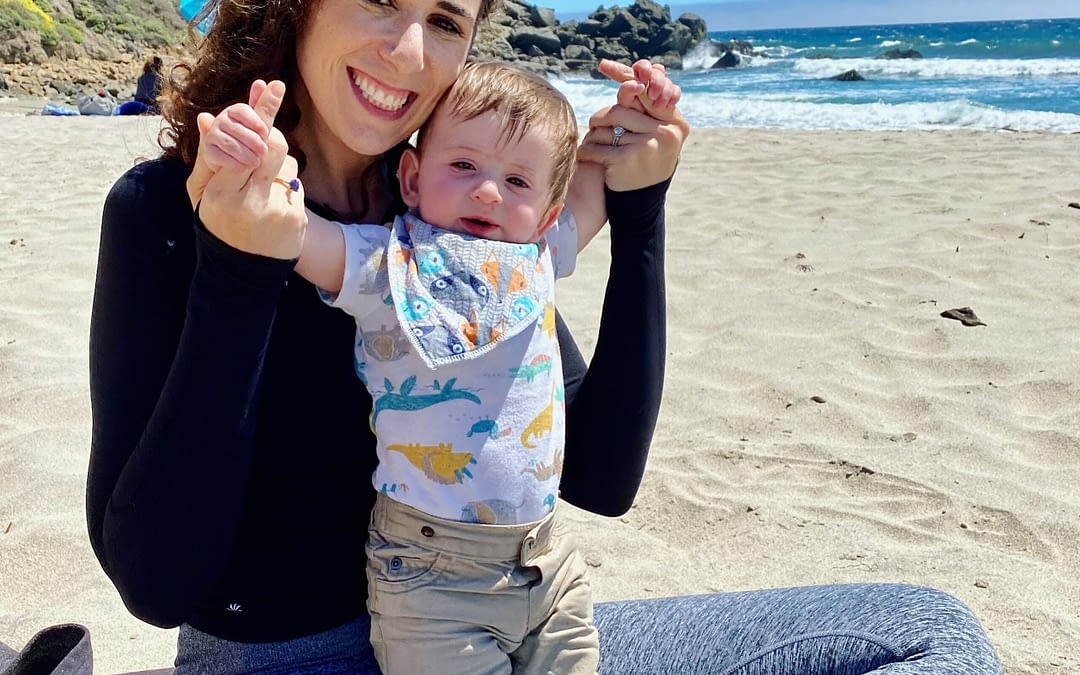
Carly’s patient was a 40 year old recently re-married woman with a new baby, and struggling with a lot of regret, guilt, shame, depression, and anxiety. Carly decided on a hunch it might be a good idea to share her personal story, since she saw this woman as a mirror image of herself.
Carly asked the patient if she wanted Carly to share her story, and this patient lit right up and was excited. It turned out to be tremendously helpful and was what she needed to believe Carly’s empathy was real and not phony. The patient said that in the past she’d had many therapists, but none of them had ever share their personal experiences or feelings.
Why was that so helpful? How does it work? And what are some red lines that you do NOT want to cross as a therapist? These are just a few of the ideas we discussed on today’s podcast.
We listed and briefly discussed a few of the many situations where it might NOT make sense to share our feelings or experiences with patients.
Rhonda pointed out that if you’ve had a traumatic experience and you’re feeling quite depressed, anxious, or angry, and have not yet had the chance to do your own personal work, it would not be the best idea to share it with your patient, because you might be using the patient as your own therapy or support network.
You also would not share
- feelings of sexual or romantic attraction to a patient
- strong personal feelings of unresolved depression, anxiety, or anger
Some feelings you might share with your patient, but only if you have the great therapeutic skill to do so in a helpful, illuminating way, such as feelings of dislike or anger toward the patient.
We also discussed the danger of therapy degenerating into a paid friend relationship, and asked how that differed from the work of Dr. Irvin Yalom, the famous Stanford psychiatrist who taught us that developing a genuine human relationship between the therapist and patient IS the goal of therapy.
Finally, we exchanged ideas about the model of therapy as a “corrective emotional experience,” and none of us seemed to take kindly to that model of therapy.
Thanks for listening today!
And thanks for the illuminating information from our brilliant and bubbly guest, Dr. Carly Zankman!
Thanks for listening today!
Carly, Rhonda, and David
Contact Information
Dr. Carly Zankman can be reached at https://www.drcarlyzankman.com/
Dr. Rhonda Barovsky is a Level 5 Certified TEAM-CBT therapist and trainer and specializes in the treatment of trauma, anxiety, depression, and relationship problems. Check out her website: www.feelinggreattherapycenter.com.
You can reach Dr. Burns at david@feelinggood.com.
Feeling down in these turbulent times? Take a ride on our Feeling Great app.
Feeling Great feels wonderful!
You owe it to yourself to feel GREAT!
Give the Greatest Gifts of ALL–Love and Happiness!